






Citi Case Study: Real-Time E-Invoice Verification and Validation for Digital Trade Finance
Building Trust into Digital Trade Finance
As global trade becomes increasingly digital, banks need greater confidence in the transaction data underpinning global supply chains. For Citi, this meant strengthening invoice-level assurance through real-time e-invoice verification and validation, without embedded within its digita; trade finance workflow.
Invoices are critical evidence of the commercial transaction being financed. Yet validation can still depend on manual reviews, fragmented data sources and follow-ups between multiple stakeholders. According to the ICC Digital Standards Initiative, supply chain information is frequently stored in paper documents, whether physical or PDF, in more than 90% of global trade. McKinsey research shows that documentation for a single shipment can run to 50 sheets of paper exchanged between up to 30 different stakeholders. As transaction volumes increase, mismatches and discrepancies can extend verification cycles and add operational complexity.
The Challenge: Manual Invoice Verification in Citi’s Trade Loan Journeys
Citi needed a scalable way to verify invoice data within its digital trade finance workflow, reduce manual checks and identify discrepancies before financing progressed.
For Citi, the invoice is primary evidence that a genuine commercial transaction sits behind each digital trade loan. Across Citi’s global markets, invoice validation sat in one of the areas of the trade lifecycle that remained heavily manual, with checks happening alongside the financing process rather than within it.
Checks rely on documents as submitted. Without a direct connection to government-backed digital public infrastructure, invoice details could not be validated in real time against an authoritative source.
Discrepancies surface late. Mismatches in invoice numbers, values, dates or transport details led to exceptions and manual follow-ups, slowing the flow of capital to Citi’s corporate clients and their suppliers.
Manual review does not scale. As transaction volumes and cross-border activity grow, adding more manual checks increases operational effort without proportionately strengthening control.
Risk can persist after disbursement. Limited invoice-level assurance can leave lenders exposed to errors and to risks such as duplicate financing, a concern across the industry. In a 2022 paper, ICC United Kingdom estimated that fraud such as double financing could cost the trade finance industry up to US$5 billion a year.
Citi needed to embed invoice-level assurance directly into its digital trade loan journeys, strengthening controls and audit readiness without adding friction for its clients. for banks. And it means a simpler loan journey and faster access to formal credit for MSME’s.
The Solution: Real-Time E-Invoice Verification and Validation Powered by CredAble
Citi partnered with CredAble to introduce a white-labelled real-time e-invoice verification and validation solution within its digital trade loan journeys, embedding invoice verification directly into the financing workflow.
How Does Real-Time E-Invoice Validation Work in Digital Trade Finance?
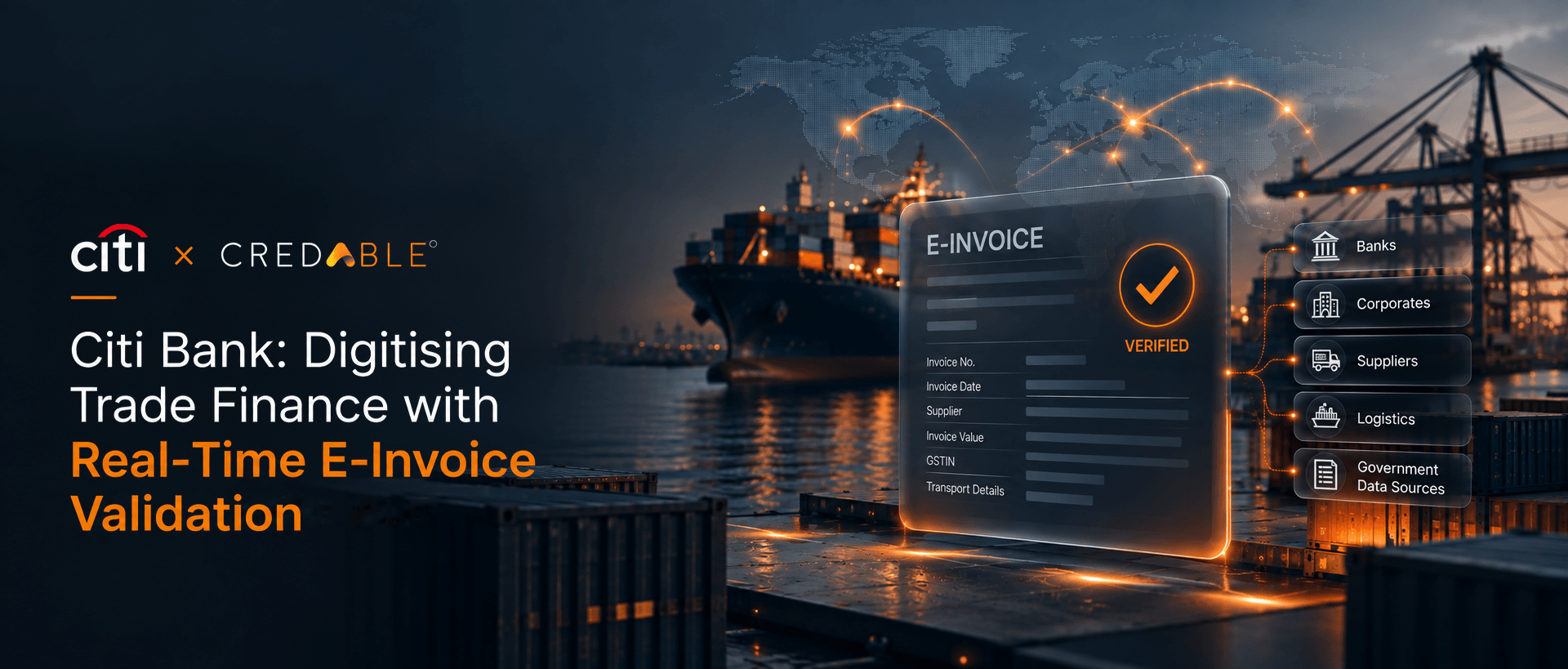
By connecting invoice verification with government-backed digital public infrastructure, submitted invoice information can be checked within the financing workflow. More than 10 invoice data fields can be checked, including invoice numbers, values, dates and transportation information.
This gives Citi greater visibility into the information underpinning each financing request and enables discrepancies to be identified earlier. For corporate clients and suppliers, verification becomes part of a single digital journey rather than an additional process operating around it.
Projected Impact of Automated Invoice Verification
The Citi–CredAble partnership brings invoice submission and verification into one unified digital flow, making it easier for corporates and their suppliers to access trade financing.
“The platform is designed to meet Citi’s rigorous standards, engineered to adapt seamlessly to evolving regulatory and client needs while ensuring a consistent and highly trustworthy user experience. This global tech partnership [with CredAble] marks an important step toward advancing trade finance infrastructure and strengthening invoice-level transparency for enterprises worldwide.”
How Citi Embedded Real-Time Invoice Verification into Trade Finance
Validate within the financing workflow
Real-time invoice validation is embedded within Citi’s digital trade loan journeys, so verification happens as part of the financing process.
Verify against trusted digital infrastructure
CredAble validates submitted invoice information against government-backed digital public infrastructure across more than 10 invoice data fields.
Surface discrepancies earlier
Structured verification helps identify mismatches and discrepancies earlier, allowing teams to focus on cases that genuinely require intervention.
Benefits of Automated E-Invoice Verification for Banks and Corporates
Introducing real-time invoice assurance creates value across the financing lifecycle.
Greater invoice-level transparency
Citi gains clearer visibility into the transaction data supporting financing requests, strengthening confidence in the underlying invoices.
Fewer exceptions and follow-ups
Digital validation reduces the need for repetitive manual verification and helps surface discrepancies earlier in the transaction journey.
Stronger audit readiness
Structured digital verification creates a clearer record of the checks performed against each invoice, supporting stronger control and audit processes.
Reduced post-disbursement risk
Validating critical transaction information earlier helps strengthen the quality of invoices progressing towards financing and supports Citi's risk management framework.
A more predictable flow of capital
For corporates and their suppliers, reducing verification friction supports a more seamless experience from invoice submission to validation and ultimately towards financing.
The Future of Digital Trade Finance: From Manual Invoice Checks to Real-Time Assurance
The evolution of invoice validation offers a wider lesson for digital trade finance. As access to trusted digital infrastructure expands, verification no longer needs to happen only after a transaction has progressed through the financing lifecycle. It can increasingly happen within the transaction itself.
Trusted data can strengthen decision-making. Automation can direct attention towards genuine exceptions, while digital verification can improve transparency without compromising the experience of corporate clients and suppliers.
The Citi and CredAble partnership reflects a common view of where trade finance infrastructure is heading: away from predominantly retrospective verification and towards models where assurance is embedded within the transaction itself. Together, the two organisations are creating an invoice assurance layer designed around the demands of increasingly complex global supply chains.
For Citi and CredAble, real-time invoice assurance is a clear move in that direction, supporting a future of trade finance that is more transparent, more scalable and built for real-time commerce.
Think Working Capital… Think CredAble!