





E-Invoicing and the New Working-Capital Model in MENA
E-invoicing in MENA is moving rapidly from a tax-compliance requirement to a new layer of digital financial infrastructure. Saudi Arabia exchanged more than 8.2 billion e-invoices in 2025, while the UAE has begun rolling out its own e-invoicing framework. For banks, the shift could reshape how invoice data is used across trade finance, credit decisioning, invoice financing and working-capital programmes.
e-invoices exchanged in Saudi Arabia in 2025
year-on-year rise in Saudi e-invoice volumes
deals can often become uneconomic for traditional bank underwriting processes
invoices can sit behind AED 1Mn of healthcare transactions
At a 2026 GTR discussion in the UAE, participants highlighted exactly this challenge: high transaction volumes, fragmented invoice data and the cost of underwriting smaller facilities keep trade finance operationally intensive, often pushing the smallest facilities furthest out of economic reach
As e-invoicing scales across the region, banks have an opportunity to put structured invoice data to work earlier across validation, credit assessment and financing.
E-Invoicing in MENA: Saudi Arabia and the UAE Lead Adoption
Saudi Arabia already shows the scale structured invoicing can achieve.The Kingdom’s Fatoora platform processed more than 8.2 billion e-invoices in 2025, according to figures published by Arab News in January 2026, a 64% increase from the more than 5 billion exchanged in 2024
The UAE e-invoicing programme is now progressing through its phased rollout. Under the UAE Ministry of Finance framework, an e-invoice is structured invoice data exchanged electronically between a supplier and a buyer; PDFs, scanned copies, images and emails do not qualify. A voluntary pilot phase began in July 2026, with mandatory adoption starting for larger businesses from January 2027.
The transition matters because a large share of the UAE's business base will be brought into this new infrastructure for the first time:
What MENA Banks Can Learn from India's E-Invoicing Model
ndia offers a useful reference point as MENA's e-invoicing adoption expands. Since its phased rollout began in October 2020, India's mandate has progressively extended from businesses with turnover above ₹500 crore to those above ₹5 crores pulling a much broader base of enterprises into a standardised digital-invoice ecosystem.
The impact extends beyond tax compliance into the wider transaction infrastructure. As outlined within India’s National Informatics Centre e-invoicing framework, standardised digital invoices can support real-time invoice sharing, automated return population, easier reconciliation and interoperability across systems — reducing manual data entry and mismatch errors
Industry experience reinforces this shift towards digitisation. Deloitte’s 2026 GST@9 survey found:
of respondents named compliance digitisation among GST's biggest successes
highlighted the stabilisation of e-invoicing and e-way bill systems
For banks across MENA, India's experience illustrates how structured e-invoicing data can become a foundation for automated reconciliation, credit assessment, invoice financing, supply chain finance and broader working-capital programmes.
How E-Invoicing Can Improve Working-Capital and Trade Finance Economics
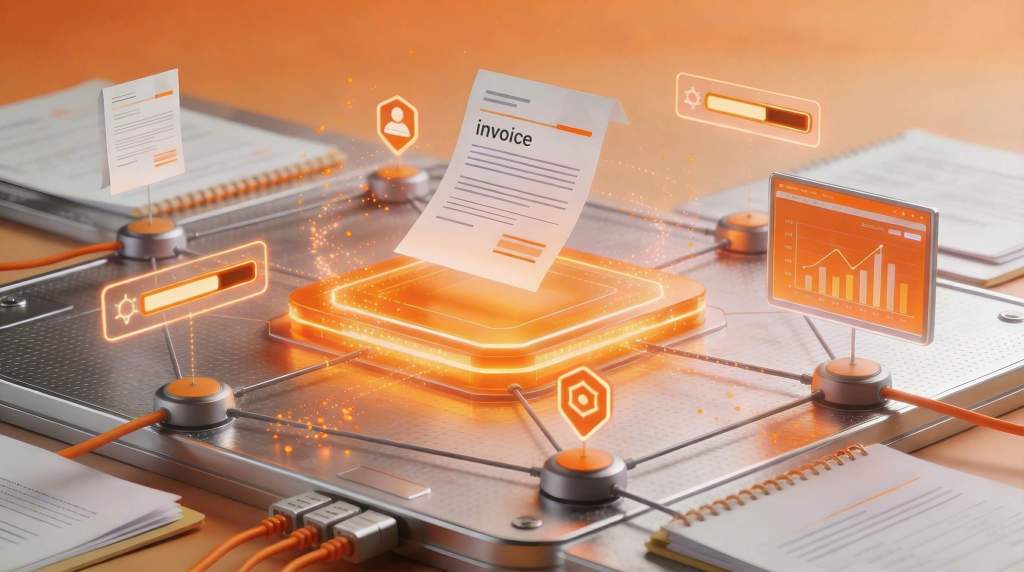
India's experience illustrates the wider opportunity. Once invoice data becomes standardised and machine-readable, it can move more efficiently across ERP systems, banking infrastructure and financing workflows — cutting repeated data entry, document extraction and manual reconciliation.
The wider benefits identified within the UAE’s e-invoicing framework include faster invoice cycles, improved cash flow and richer machine-readable data that can support more proactive decision-making.
For banks, this creates a more connected financing journey:
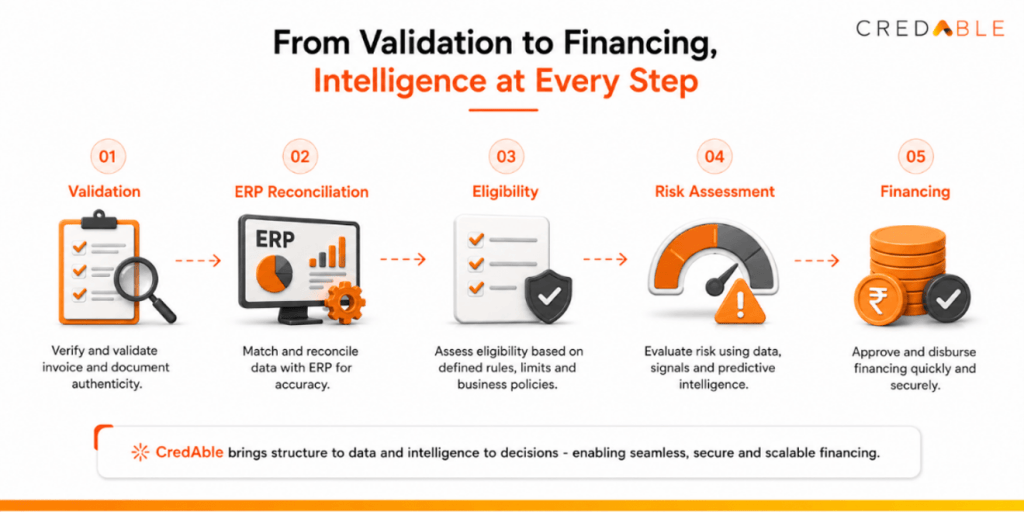
Invoice value, counterparty information, payment terms and transaction timing can become available earlier, and in a format usable directly across financing workflows particularly where banks need to process high volumes of smaller transactions while keeping cost-to-serve commercially viable.
From E-Invoicing Data to Credit Decisioning
E-invoicing gives banks a stronger source of structured transaction data, but that data still needs to be translated into credit, eligibility and risk decisions. Eligibility, buyer strength, supplier behaviour, concentration, limits, duplicate invoices and transaction anomalies all still need to be assessed.
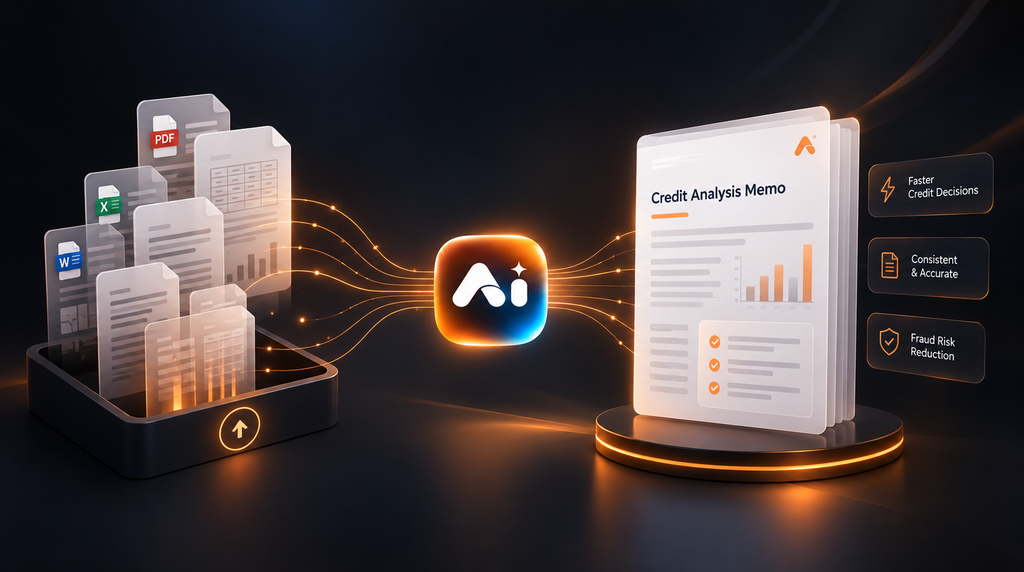
This is where digital decisioning and AI can support scale. Rules engines can automate policy and eligibility checks; AI can assist with anomaly detection, transaction analysis and credit summaries freeing credit teams to concentrate on exceptions and complex exposures.
This is also where banks and fintech platforms increasingly intersect. Banks bring funding capacity, risk frameworks and customer relationships, while fintech infrastructure can help automate invoice validation, reconciliation, programme eligibility, transaction monitoring and financing workflows at scale.
Connecting E-Invoicing to Digital banking and Working-Capital Infrastructure
For banks, the full value of e-invoicing depends on how effectively structured invoice data connects with digital banking, credit decisioning, ERP and working-capital infrastructure. Corporate ERP systems generate transaction data. Credit infrastructure applies risk policy. Financing platforms determine programme eligibility and funding. These components need to work as one connected journey.
At CredAble, our view is that the full working-capital value of e-invoicing emerges when structured invoice data connects directly with decisioning and financing infrastructure — across three layers:

Invoice data creates transaction visibility. Decisioning translates that information into validation, eligibility, underwriting and risk outcomes. Working-capital infrastructure then connects approved transactions to receivables, payables, inventory and other financing structures.
The Future of E-Invoicing and Working Capital in MENA
Saudi Arabia has already demonstrated the scale e-invoicing can reach, while India shows how standardised invoice data can mature into a wider digital ecosystem supporting reconciliation, credit models and financing. As the UAE e-invoicing framework develops, MENA banks have an opportunity to connect this emerging data infrastructure directly with trade finance and working-capital products.
For banks across MENA, the opportunity lies in using this new data layer across the working-capital journey — from validating transactions and assessing eligibility, to underwriting and financing.
People Also Ask -
E-invoicing enables banks to access structured, machine-readable invoice data, reducing manual processing and improving transaction visibility. By connecting this data with credit assessment, eligibility checks and financing platforms, banks can accelerate invoice financing, improve operational efficiency and expand working-capital access for corporates and SMEs across MENA.
Saudi Arabia's Fatoora platform exchanged over 8.2 billion e-invoices in 2025, demonstrating the scale of digital invoicing adoption. The UAE began its voluntary e-invoicing pilot in July 2026, with mandatory adoption for larger businesses scheduled from January 2027. These developments create opportunities for banks to integrate structured invoice data into financing and risk-management workflows.
Banks can use structured e-invoice data to automate invoice validation, reconcile transactions with ERP systems, assess financing eligibility and support credit decisioning. Integrating invoice data with supply chain finance platforms can reduce processing costs, strengthen risk controls and enable faster financing decisions across high-volume supplier ecosystems.
AI helps banks translate structured invoice data into actionable credit and risk insights. Combined with automated rules engines, AI can support duplicate-invoice detection, transaction anomaly identification, supplier behaviour analysis and credit assessment. This allows banks to process larger transaction volumes while maintaining underwriting controls and improving financing efficiency.
Think Working Capital… Think CredAble!
